
A Beginner’s Roadmap to a Tech Career
I know what you are thinking… you are thinking about coding right? Just a bunch of code on the screen moving up or down like in the movies before the main character says, ‘I’M IN!’… well, that’s not the ‘tech’ we are going to talk about today. At least not mainly. Think about a robotic arm, or a rover moving around lazily in mars. If you are fascinated by machines that move, the physical side of tech, then you did good clicking on this blog.
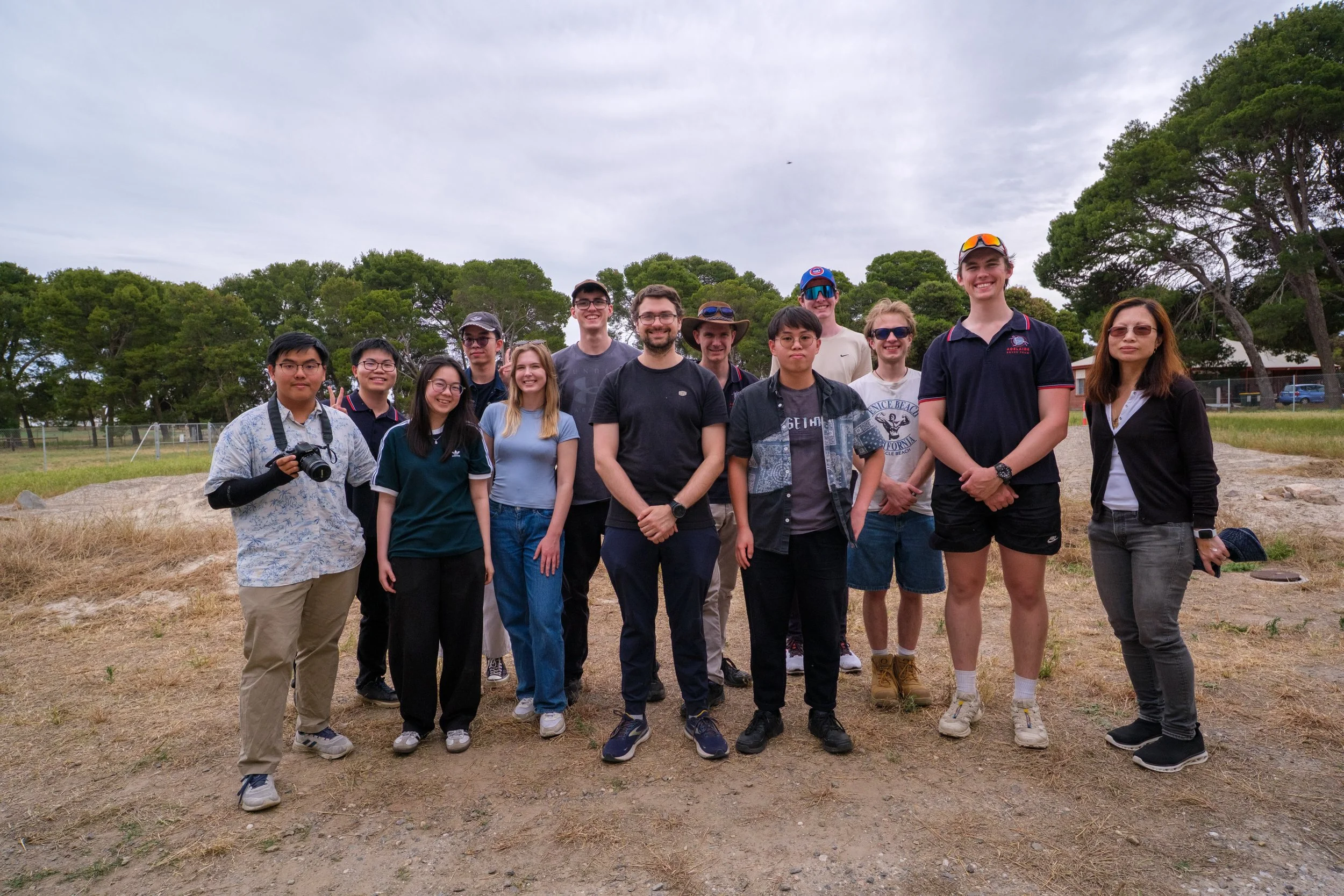
The Adelaide Rover Team at a rover testing session at Adelaide University’s Roseworthy Campus
Here is your beginner’s roadmap:
1. Lay The Foundation
If you have the money for school, great! Get a bachelor's then a Master’s degree in mechanical engineering or anything similar. The fact of the matter is, degree holders are still getting paid more and who does not want to get paid a load ton of money while doing what they love?! But if you do not have the money for school, you are in luck. Why? Because you exist in such a time as this. As long as you have access to the internet, you can learn all mechanical fundamentals with the click of a button. Here are some YouTube channels to start with:
2. Specialise
You now have the basics and have a general idea of this very vast topic. You can now pick a subtopic and be a master at it. Here are the main areas you might want to consider:
Robotics Software Engineer – You basically write the core software; from perception (interpreting sensor data) to localisation and path planning.
GNC Engineer (Guidance, Navigation and Control) – You specialise in keeping a rover stable and on course. This career combines aerospace and software. It is perfect for math-lovers.
Systems Engineer – You understand how the mechanical, electrical and software subsystems interact. How do you ensure the motor controller communicates with the navigation computer? Are the thermal conditions met? These are some of the problems you may be solving.
3. Practice
If you are getting your degree, take your school projects seriously. This field is tough to master but good things take time, and hard work definitely pays off. Contribute to open-source robotics projects. Volunteer, and if you can’t, freelance. Join communities that share your passion (like the Adelaide Rover Team) and get your hands dirty! Nothing beats real-life practice!
4. Document
Document everything you have done so far and build a strong portfolio. A GitHub repo with your code, or a video of your homemade rover running around your backyard with your dog is worth its weight in gold. Target the right companies and look beyond the obvious (NASA, ESA, SpaceX). The ecosystem is huge! Especially now with the development of AI. If you can find a start-up willing to hire you, the better. You will get to learn a lot of things fast. Network on LinkedIn with fellow engineers. Attend conferences like International Astronautical Congress (IAC) and International Conference on Intelligent Robots and Systems (IROS). They may cost you a pretty penny but if you are in the right communities (and sometimes the right school) you may get to attend them for free.
5. Summary
And this is, in summary, the roadmap to a tech career! It is not as easy as it looks (or reads in this case) but it is extremely rewarding if pursued. Remember: Curiosity is your power source. The more curious you are, the more motivation you will have to continue down this career path. So, start building. Start exploring. The best is SET to come!
